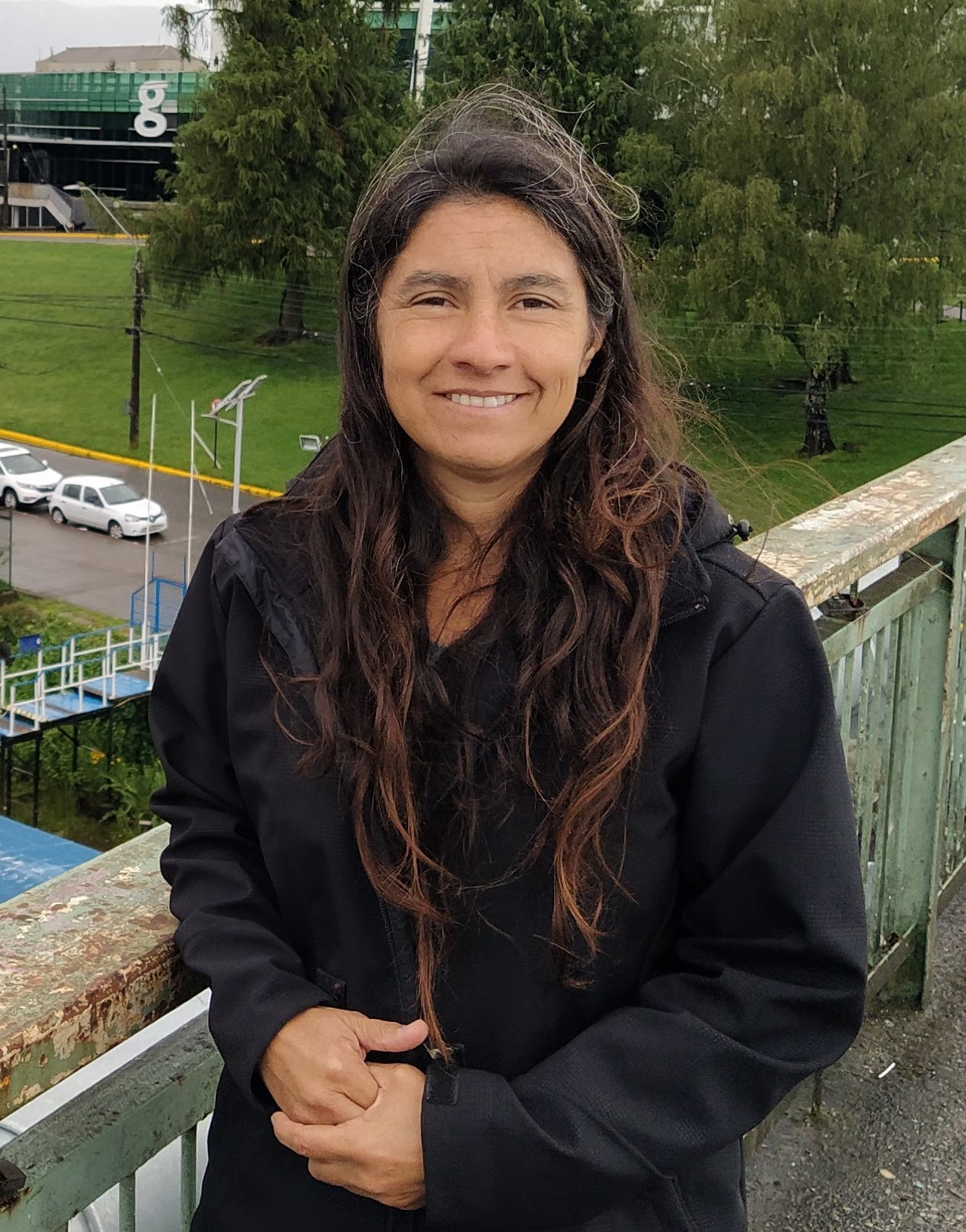
María de los Angeles Loredo
ANG, Asociación Naturista Geselina
Historia proporcionada por María de los Angeles Loredo
ANG, Asociación Naturalista Geseliana
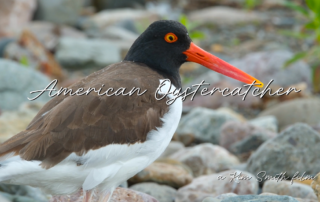
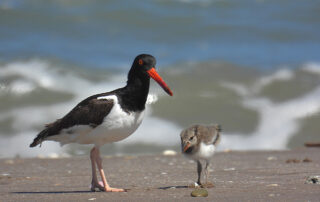
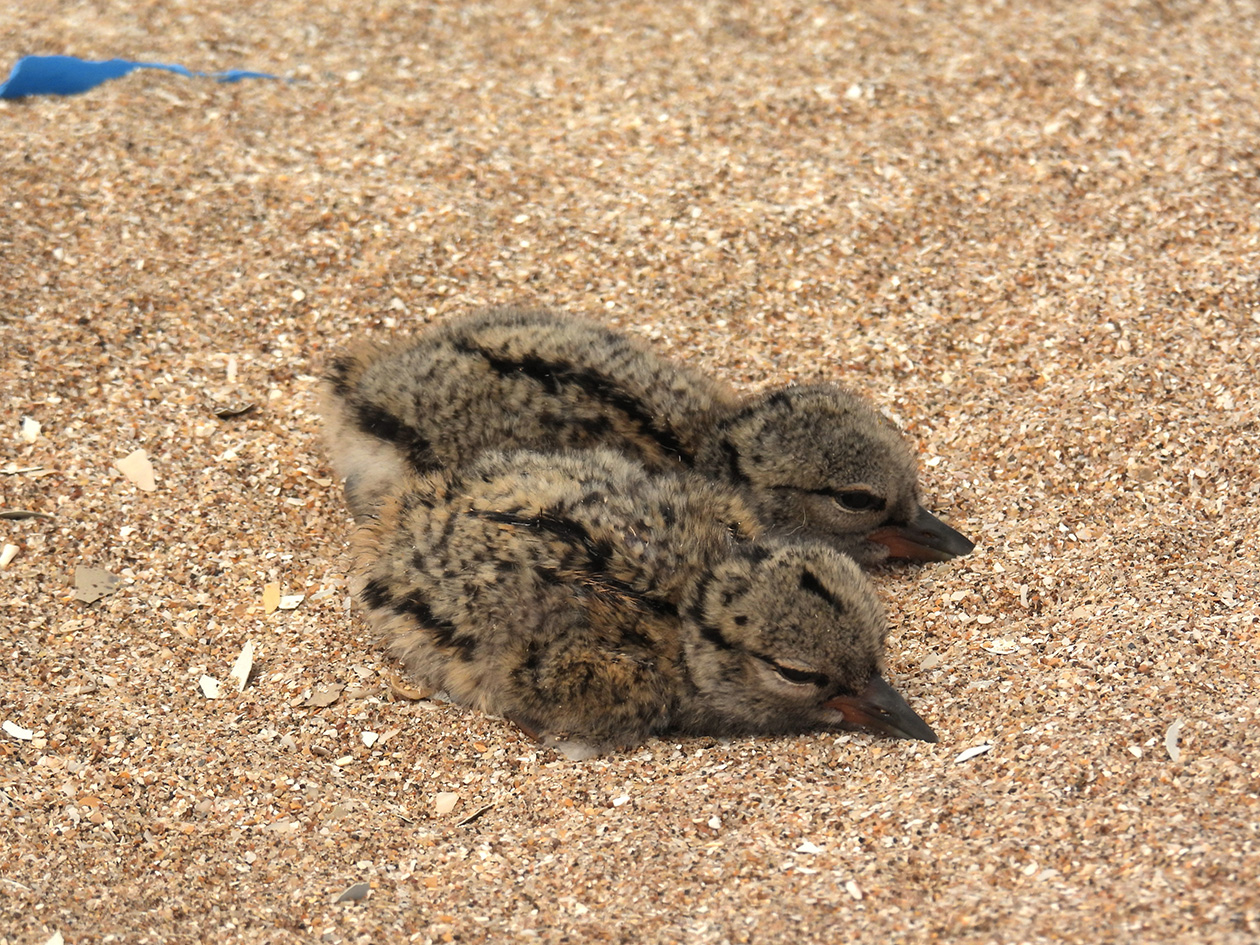
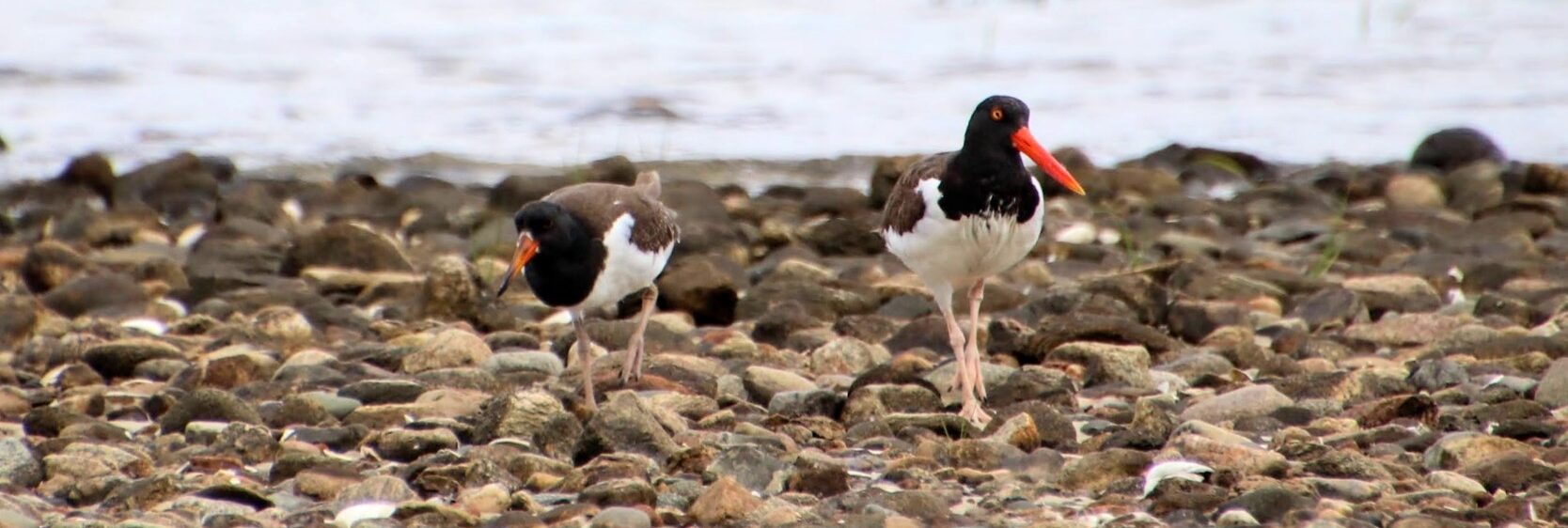
En el marco de los Pequeños Fondos Manomet para la Conservación de las Aves Playeras del Neotrópico, comenzamos a llevar adelante en agosto de 2025, un proyecto destinado a generar información de base sobre la reproducción del Ostrero pardo y fortalecer herramientas de conservación en Villa Gesell, una localidad costera argentina sometida a una fuerte presión por la actividad turística durante el verano austral.
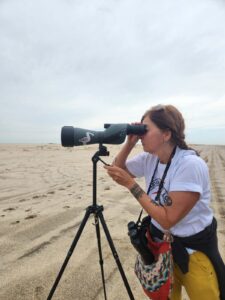
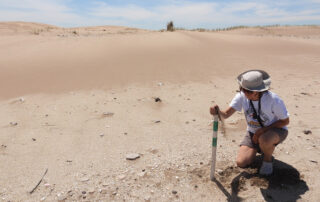
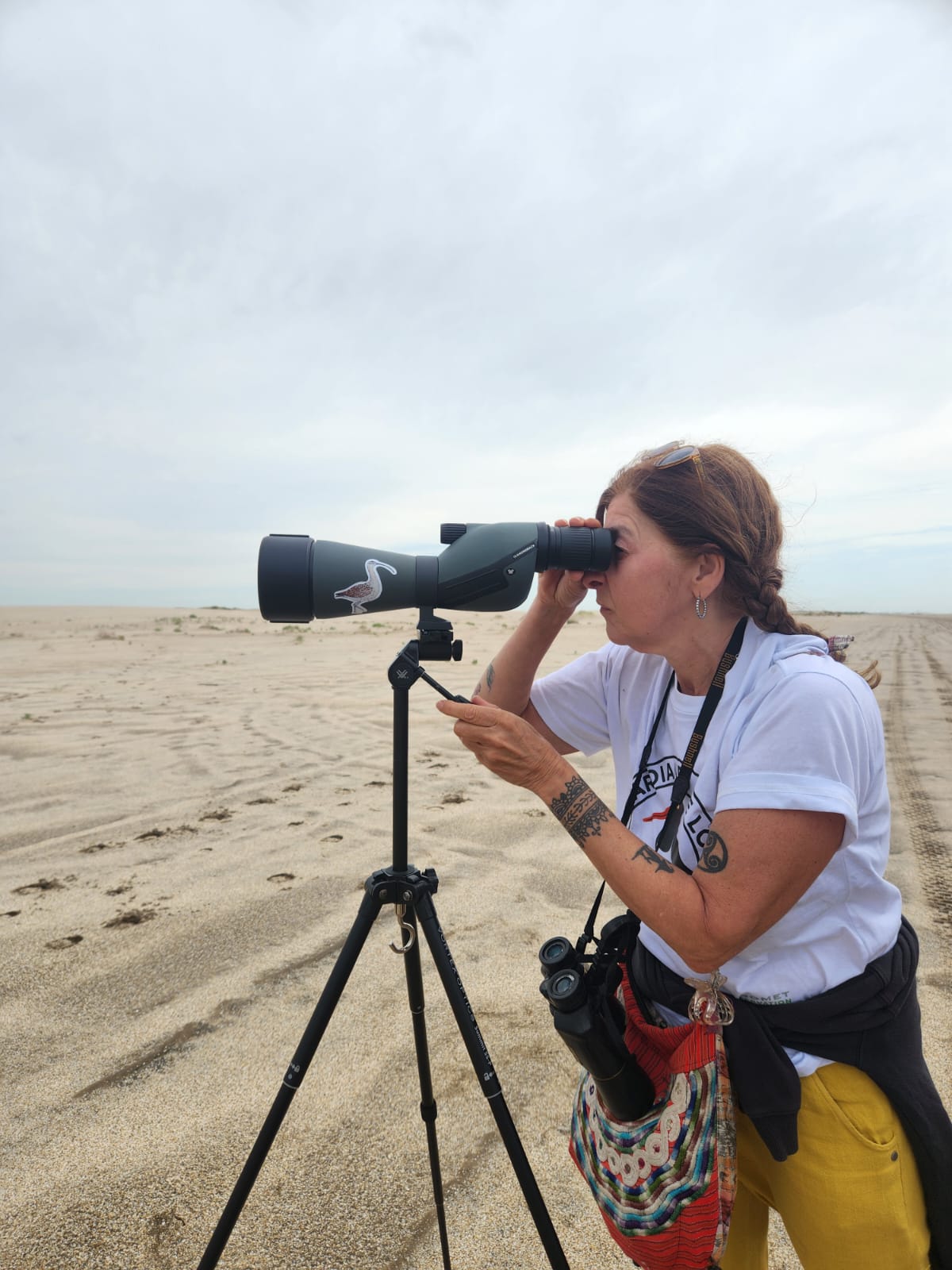
Guardianes de los ostreros americanos monitoreando aves. Foto de María de los Angeles Loredo
El proyecto tuvo como objetivos determinar la cantidad de parejas reproductivas, localizar y monitorear nidos, y evaluar medidas de mitigación para la especie en dos áreas de trabajo: la Reserva Natural Faro Querandí, un área de dunas de 6000 hectáreas y 20 km de frente costero, y la franja de dunas del norte de la ciudad, zona con un alto nivel de disturbio antrópico. Con la idea de vincular a la comunidad con la conservación de la especie, conformamos el cuerpo de Guardianes de los Ostreros, un grupo de vecinos que participaran en el trabajo de campo y otras actividades destinadas a difundir el ciclo de vida del ostrero y las problemáticas que enfrenta. Al presentar el proyecto hicimos la convocatoria, explicamos sus alcances y cuáles eran las tareas a realizar en campo.
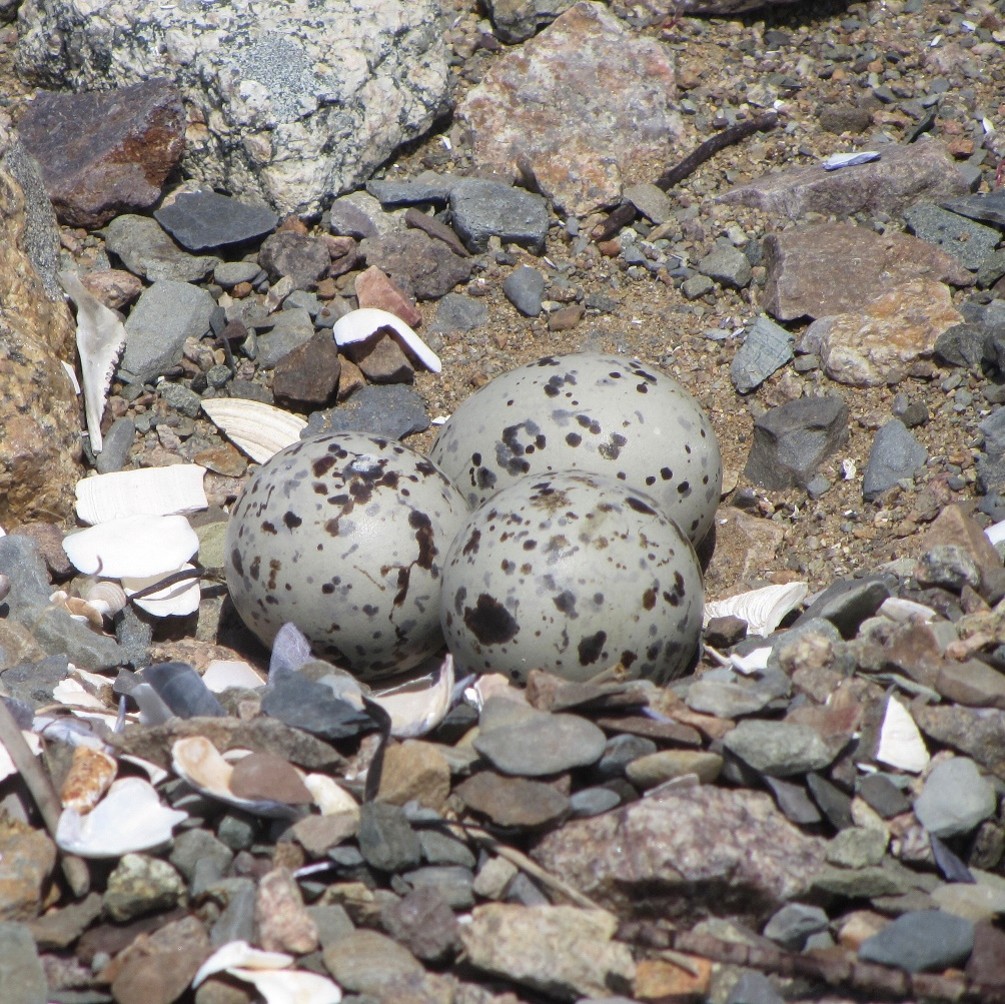
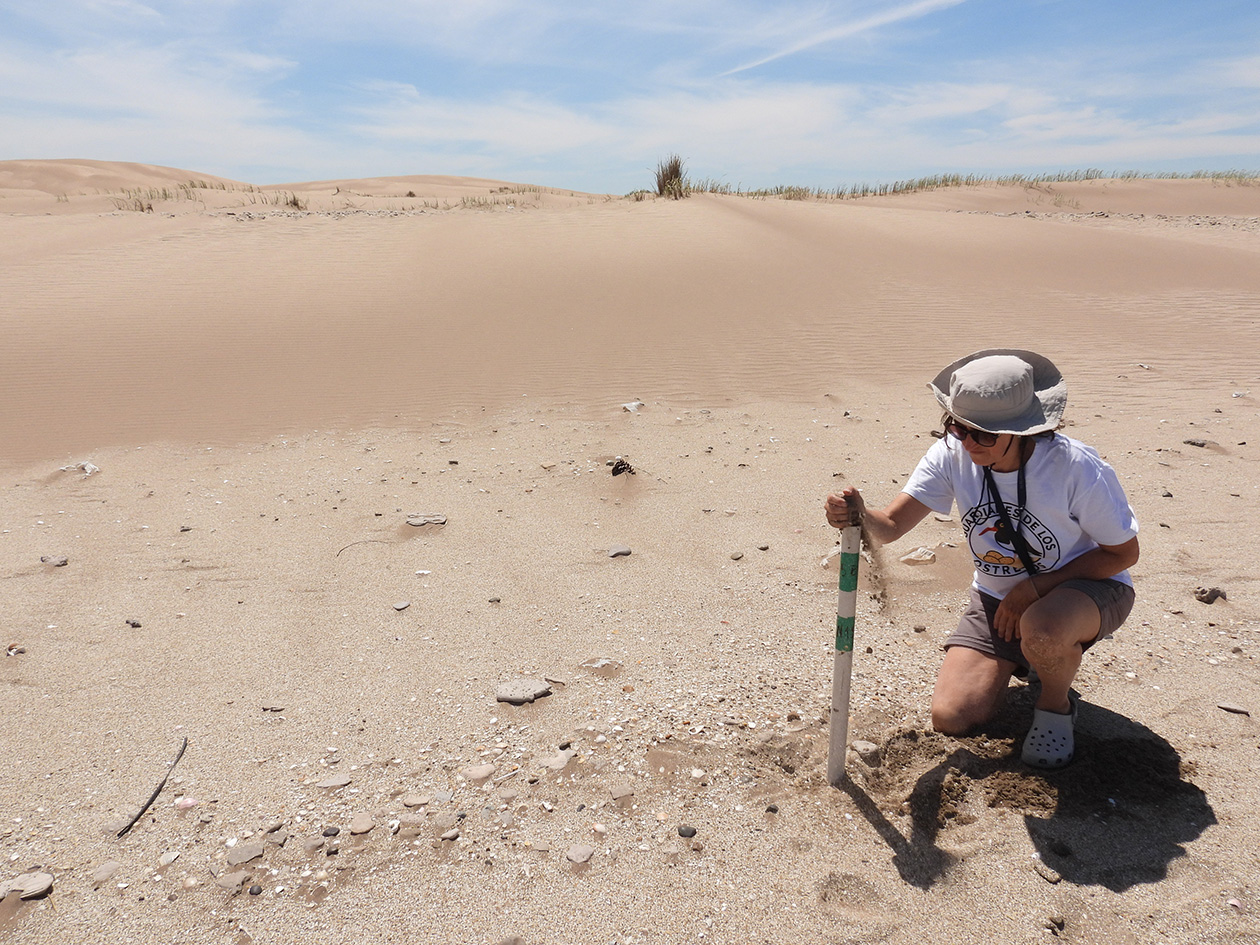
Desde fines de agosto hasta diciembre relevamos sistemáticamente una vez por semana ambos sectores. El primer recuento de parejas lo hicimos las personas a cargo del proyecto, recorriendo ambas zonas en vehículo doble tracción y geoposicionando la ubicación de cada pareja. Una vez que detectábamos nidos, los marcamos con un caño plástico asignándole un número para la pareja y una letra para la puesta. Luego subíamos su ubicación e indicaciones específicas al grupo de whatsapp, medio de comunicación de Guardianes, para que pudieran localizarlos.
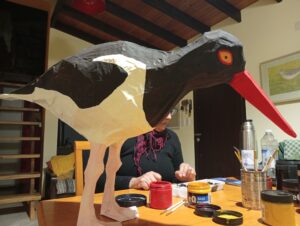
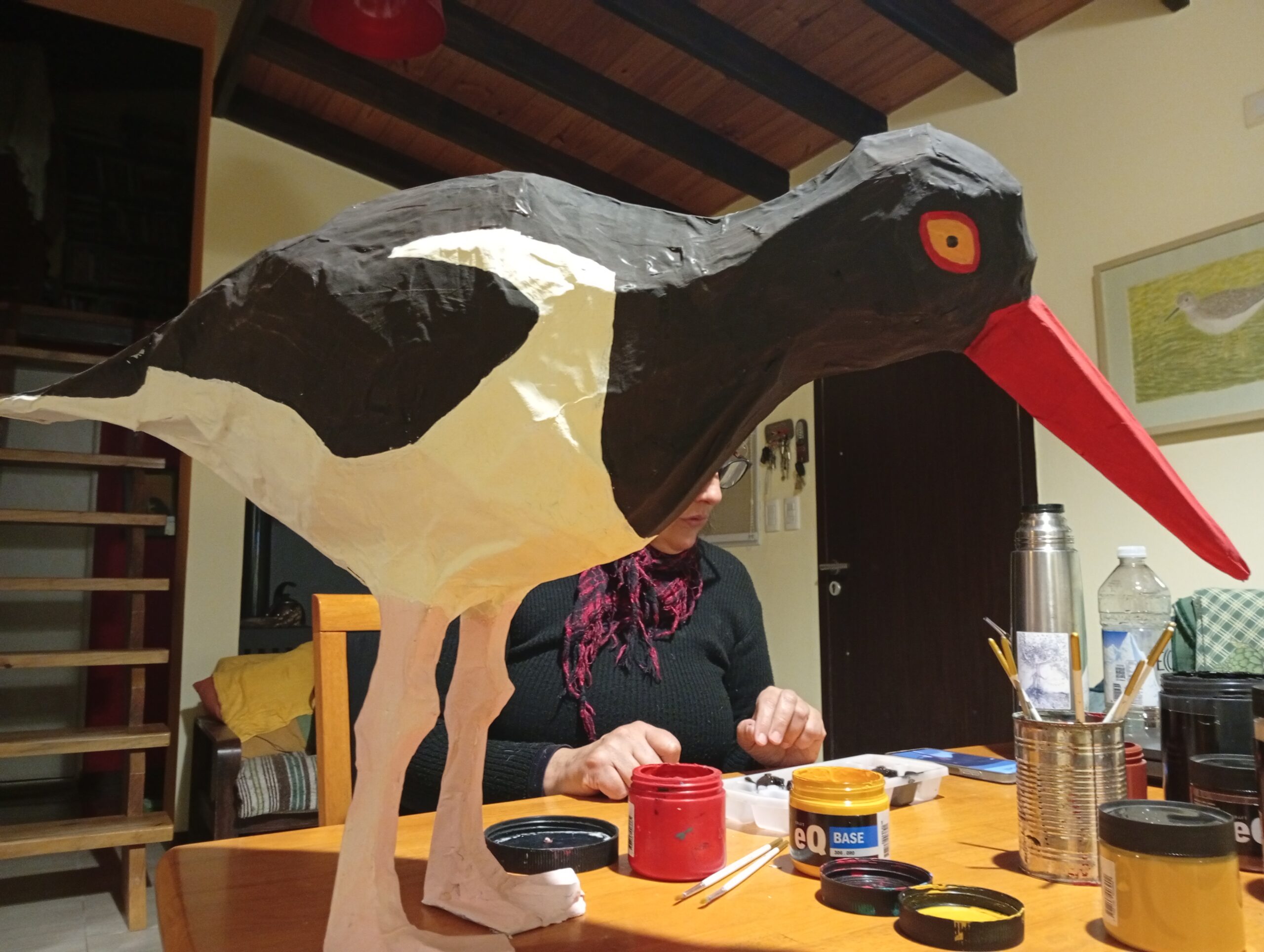
El “Ostrero Viajero” se utiliza en talleres para crear conciencia sobre la especie, sus amenazas y cómo las personas pueden ayudar a reducir las perturbaciones durante los períodos críticos de reproducción. Foto de María de los Angeles Loredo
Los Guardianes completaban las planillas con las observaciones: zona, fecha, hora, número de pareja y letra del nido, ubicación, referencia, intervención, cantidad de huevos, pichones, distancia de huellas al nido, y cualquier otra observación que consideraran pertinente. Tomaban fotos y subían la información al grupo de whatsapp. A su vez, informaban a los curiosos o advertían de la presencia de nidos a quienes estuvieran realizando alguna actividad en playa.
También trabajaron en la colocación de cartelería informativa e indicativa y en la colocación de cubiertas en los nidos protegidos. Con el fin de que estuvieran identificados, hicimos remeras con el logo de Guardianes. Nos asociamos con la Fundación Ecológica Pinamar, ONG de la localidad vecina que aportó un grupo de guardianes muy activo, que trabajó en los monitoreos y contribuyó significativamente en tareas de sensibilización y educación ambiental, con la publicación en redes, difusión de información a vecinos, turistas y en medios de comunicación locales, y la colocación de carteles en comercios. También nos asociamos con un taller de arte local que realizó el “Ostrero viajero” y está trabajando con los niños que acuden al taller. Las guardaparques locales también colaboraron en los monitoreos y brindan charlas en las escuelas haciendo foco en nuestro ambiente nativo, la reserva y el ciclo de vida del ostrero.
Aunque el proyecto como parte de los pequeños fondos es limitado, esto fue solo el principio. Tenemos mucho trabajo por delante y pretendemos consolidar el programa Guardianes de los Ostreros como una experiencia de conservación participativa con continuidad a largo plazo y hacerla extensiva a otras localidades costeras. El proyecto permitió generar información inédita para la localidad y al mismo tiempo, construir una red comunitaria comprometida con la protección del Ostrero Pardo y de los ambientes costeros que la especie utiliza para reproducirse.
María de los Angeles Loredo
ANG, Asociación Naturista Geselina
ENGLISH TRANSLATION
Story provided by María de los Angeles Loredo
ANG, Geselian Naturalist Association
As part of the Manomet Small Grants Program for the Conservation of Neotropical Shorebirds, we began implementing a project in August 2025 aimed at generating baseline data on the breeding of the American Oystercatcher and strengthening conservation tools in Villa Gesell, an Argentine coastal town under heavy pressure from tourism during the southern hemisphere summer.
Guardians of the American Oystercatchers monitoring birds. Photo by María de los Angeles Loredo
The project’s objectives were to determine the number of breeding pairs, locate and monitor nests, and evaluate mitigation measures for the species in two study areas: the Faro Querandí Nature Reserve—a 6,000-hectare dune system with a 20-km coastline—and the dune strip north of the city, an area with a high level of human disturbance. With the aim of engaging the community in the conservation of the species, we formed the “Guardians of the Oystercatchers,” a group of local residents who would participate in fieldwork and other activities designed to raise awareness about the oystercatcher’s life cycle and the challenges it faces. When we presented the project, we issued a call for participants, explained its scope, and outlined the tasks to be carried out in the field.
From late August through December, we systematically surveyed both areas once a week. The initial count of breeding pairs was conducted by the project team, who traveled through both zones in a four-wheel-drive vehicle and geotagged the location of each pair. Once we detected nests, we marked them with a plastic pipe, assigning a number to the pair and a letter to the clutch. We then uploaded their locations and specific instructions to the WhatsApp group—the Guardians’ communication channel—so they could locate them. The Guardians filled out the forms with their observations: area, date, time, pair number and nest letter, location, reference point, intervention, number of eggs and chicks, distance of tracks from the nest, and any other observations they deemed relevant. They took photos and uploaded the information to the WhatsApp group. They also informed curious onlookers or alerted people engaged in beach activities to the presence of nests.
The “Traveling Oystercatcher” is used in workshops to raise awareness of the species, its threats, and how people can help reduce disturbance during critical breeding times. Photo by María de los Angeles Loredo
Additionally, they worked on installing informational and directional signage and placing covers over protected nests. To ensure they were easily identifiable, we made T-shirts featuring the Guardianes logo. We partnered with the Pinamar Ecological Foundation, an NGO from the neighboring town that provided a very active group of guardians. They worked on monitoring efforts and contributed significantly to environmental awareness and education by posting on social media, sharing information with residents, tourists, and local media, and placing signs in local businesses. We also partnered with a local art studio that created the “Traveling Oystercatcher,” and is currently working with the children who attend the workshop. Local park rangers also assisted with monitoring and give talks at schools, focusing on our native environment, the reserve, and the oystercatcher’s life cycle.
Although the project, as part of the small grants program, is limited in scope, this was just the beginning. We have a lot of work ahead of us, and we intend to consolidate the Guardians of the Oystercatcher program as a participatory conservation initiative with long-term sustainability and expand it to other coastal communities. The project generated previously unrecorded data for the community and, at the same time, helped build a community network committed to protecting the American Oystercatcher and the coastal habitats the species uses for reproduction.