Meet the New Kid on the Marsh!
By Meredith Wray and Emmy Casper, Conserve Wildlife Foundation of New Jersey and Samantha Collins, The Wetlands Institute
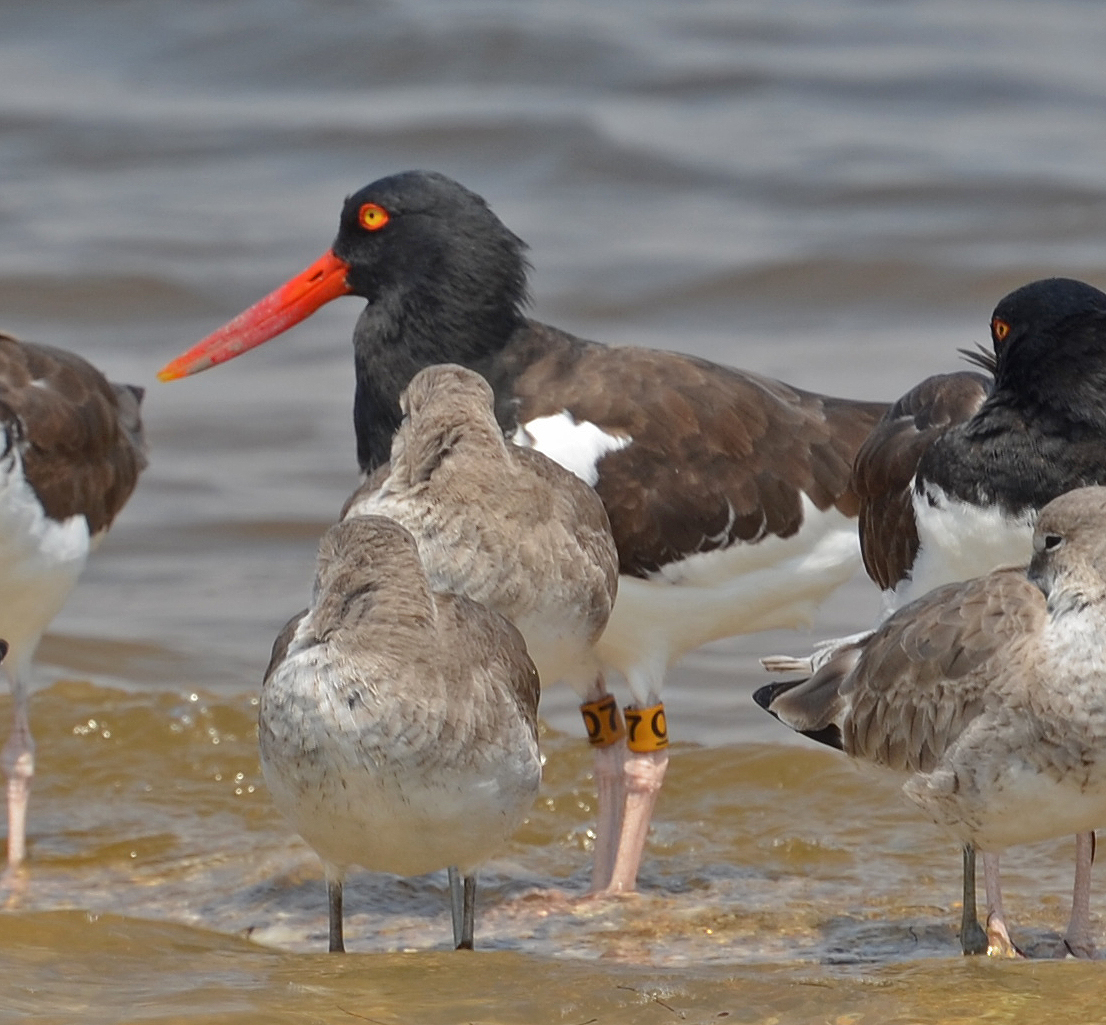
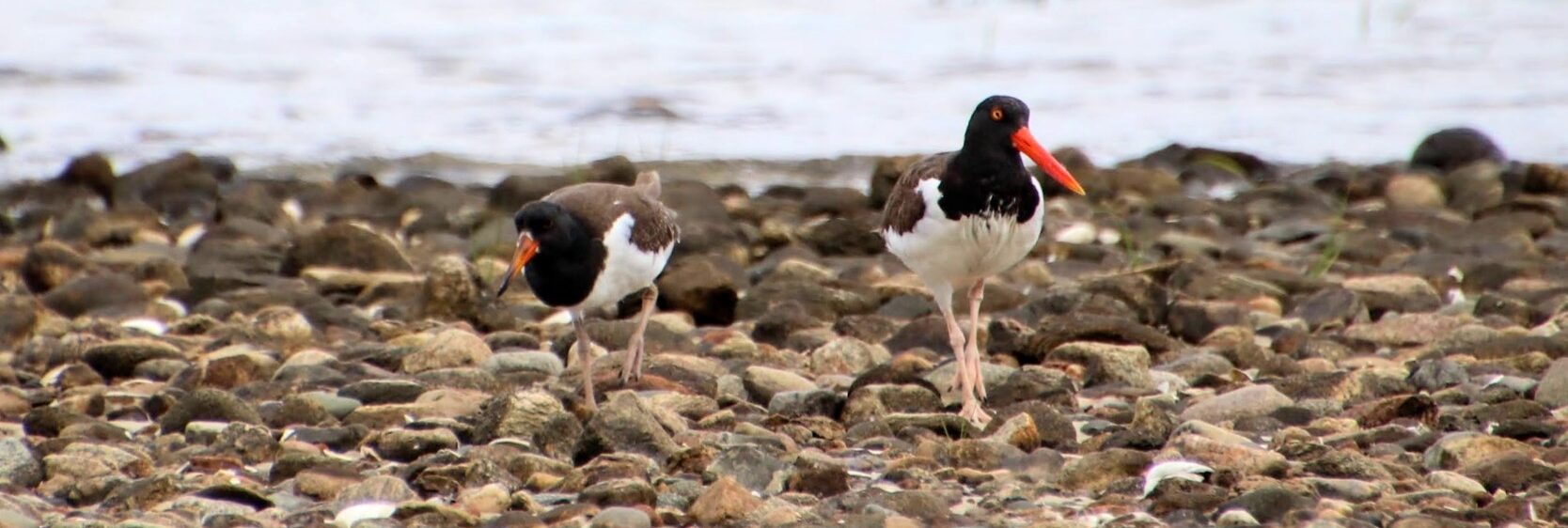
Orange 07 on its wintering grounds at Cedar Key, FL in 2015. Image courtesy of Pat Leary.
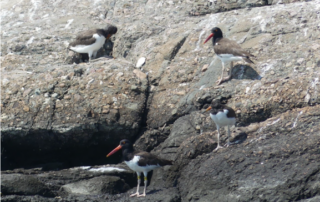
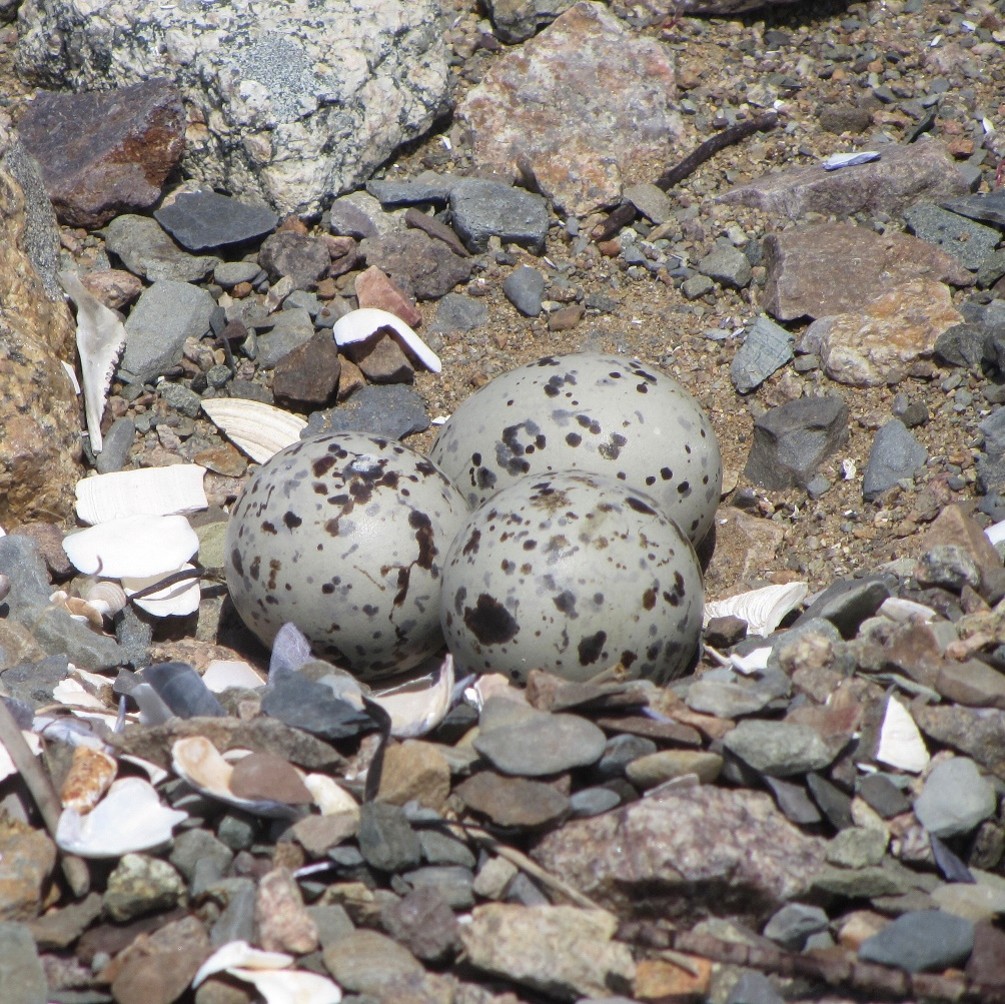
During a recent American oystercatcher (Haematopus palliatus) survey within the marsh islands of Great Bay Boulevard Wildlife Management Area (New Jersey), Conserve Wildlife Foundation biologist Emmy Casper and biological technician Meredith Wray observed an undocumented pair of adult oystercatchers acting defensive, a telltale sign that they were hiding something. Sure enough, a healthy chick appeared from the marsh, hatched from a nest so well hidden it had gone undetected until now!
The surprises didn’t stop there. One parent, Orange 07, was banded as a chick on nearby Hither Island in 2010 and has since been spotted regularly on its wintering grounds at Cedar Key, Florida. At an impressive 16 years old, this is its first documented nesting record – a reminder of how little we know about marsh-nesting oystercatchers in New Jersey compared to their beach-nesting counterparts.
Thanks to a one-year grant from the Atlantic Flyway Shorebird Initiative through the National Fish and Wildlife Foundation, The Wetlands Institute and partner organizations Conserve Wildlife Foundation of New Jersey and Stockton University we were able to initiate the necessary work to give oystercatcher populations nesting in the salt marshes of New Jersey the attention they deserve, we’re finally beginning to uncover stories of birds like Orange 07 across the state. Salt marshes provide important nesting, foraging, and roosting habitat for a variety of shorebird species, including the charismatic American oystercatcher. Understanding the reproductive success of American oystercatchers in salt marshes is crucial because their success can reflect the quality of the habitats they occupy. Pairs nesting within salt marsh habitats often have received limited attention to fully understand habitat selection, reproductive success, and threats to nesting.
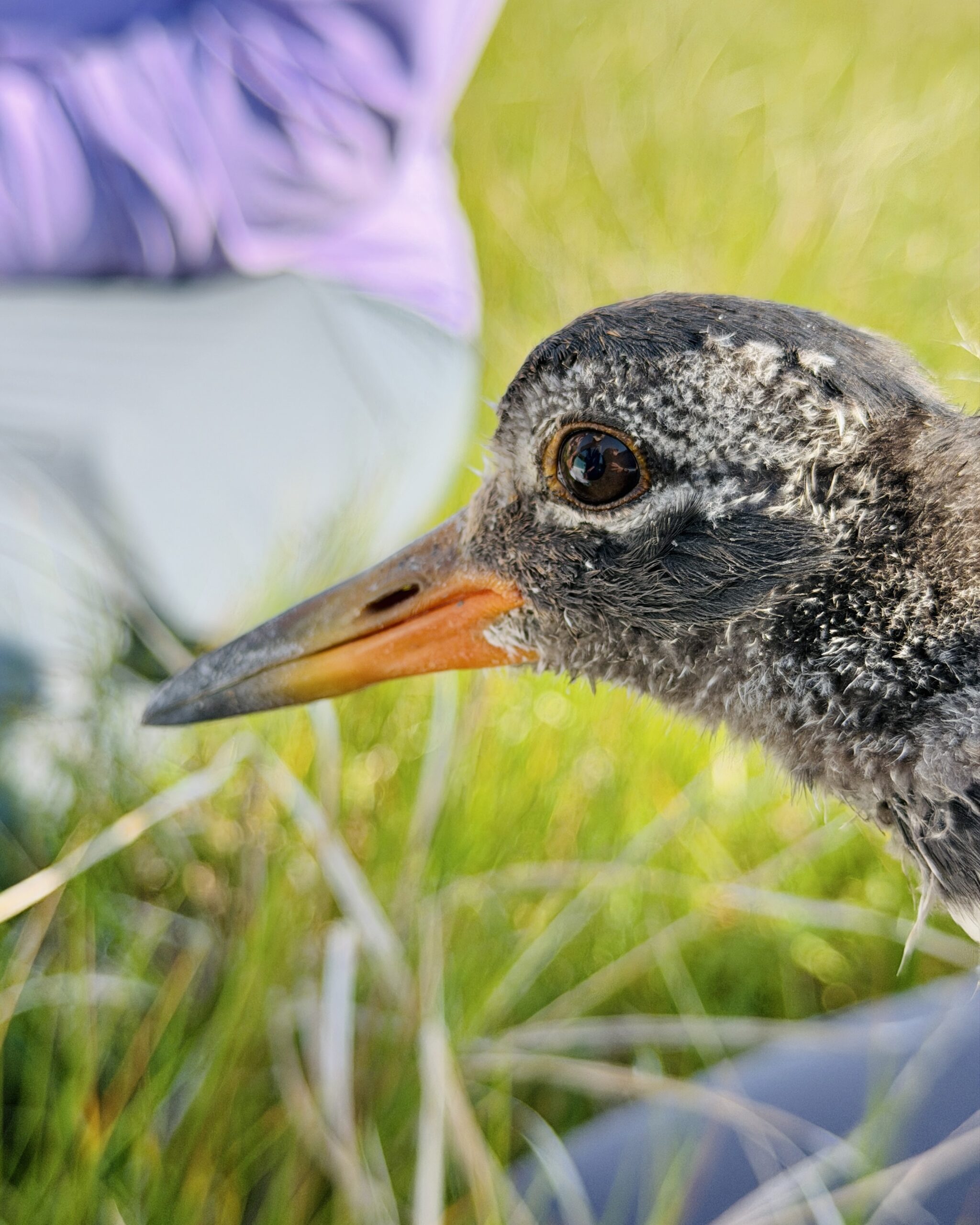
American Oystercatcher chick. Image courtesy of Meredith Wray
Shortly after finding Orange 07’s chick, Conserve Wildlife Foundation staff banded it with the code Orange C87 and affectionately named it “Oopsy Daisy” – a nod to its surprise discovery. After taking some morphological measurements, Oopsy Daisy was released back into the marsh to reunite with its attentive parents. We are happy to say that since the banding, Oopsy Daisy was recently seen flying for the first time with its parents, indicating a successful fledge! Only time will tell where it will end up next, and if it will return to its natal island to raise its own family.
Through our study we are learning a lot about survey and monitoring methods for breeding pairs within salt marsh habitats so, with the hopes of future funding, we can continue to better understand how to locate and monitor nests or chicks like Oopsy Daisy. Filling these marsh data gaps could play an important role in informing state- and range-wide population trends and identifying opportunities for conservation in a changing coastal landscape.
All handling/banding was completed for research purposes and under appropriate state and federal permits.
The views and conclusions contained in this document are those of the authors and should not be interpreted as representing the opinions or policies of the U.S. Government or the National Fish and Wildlife Foundation and its funding sources. Mention of trade names or commercial products does not constitute their endorsement by the U.S. Government, or the National Fish and Wildlife Foundation or its funding sources. This report was funded with support from the U.S. Fish and Wildlife Service grant F24AP01455.