
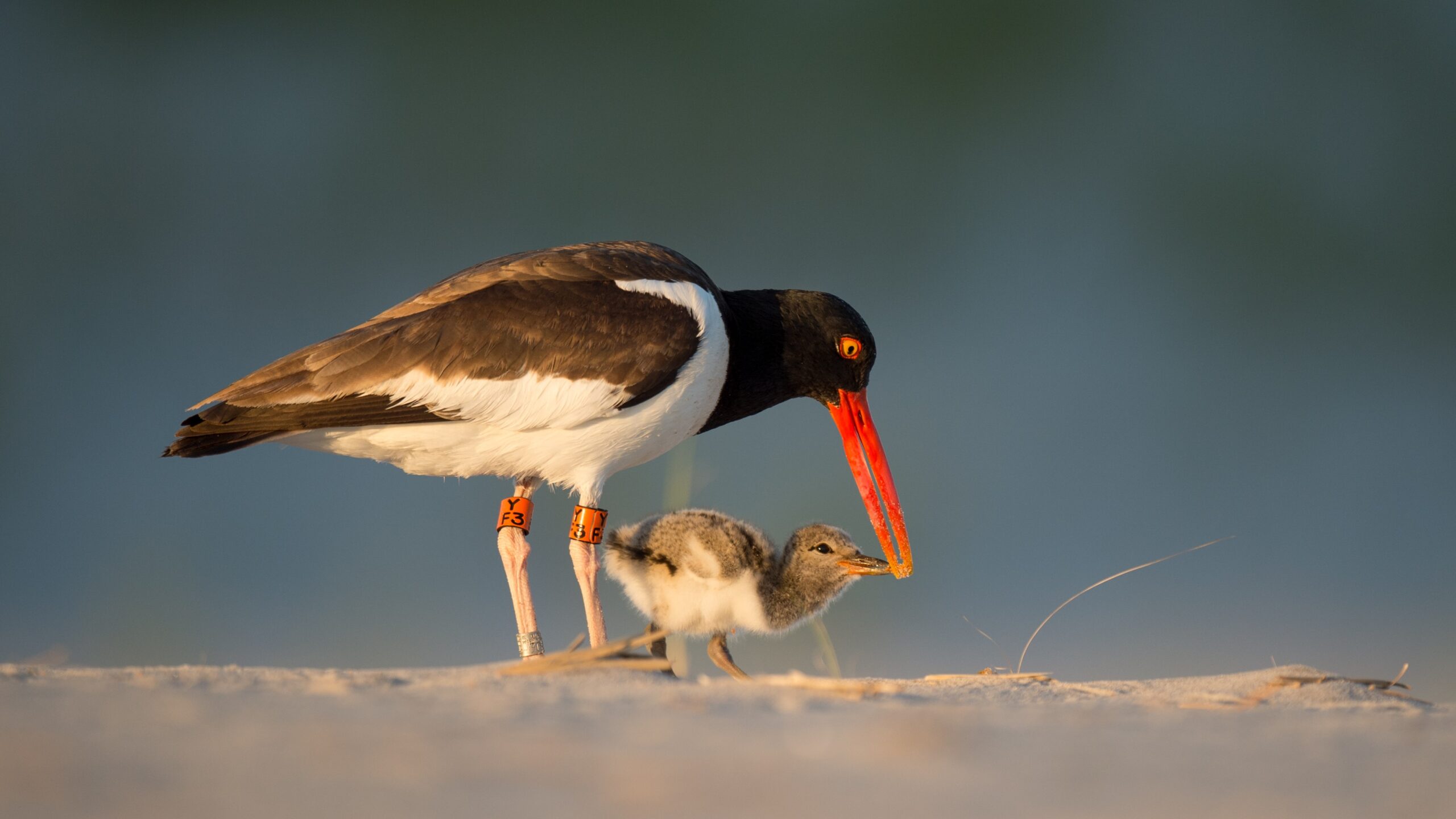
Photo by Ray Hennessy
Conservation in the Field
American Oystercatchers are striking black and white shorebirds with large orange bills and an equally striking conservation story. Found only on the coast in proximity to shellfish, they face many threats throughout their range and have conservation status in most U.S. states where they occur. Despite these challenges, dedicated, targeted, collaborative research, monitoring, and management have turned their U.S. population’s decline around.
In 2003, the first range-wide winter survey found only about 11,000 oystercatchers across the U.S. Atlantic and Gulf coast. Subsequently, researchers found numbers were declining across their range. Nesting oystercatchers were not able to hatch and raise enough chicks because of pressure from predators, habitat loss, and disturbance from human activities. By 2008, the population was down to about 10,150 birds and declining by about 1.5% per year. With funding from the National Fish and Wildlife Foundation, a range-wide recovery initiative was launched through the American Oystercatcher Working Group. Now, from 2008-2023, the U.S. population has increased 45% to an estimated 14,735 birds. The species still faces serious threats, including habitat loss from sea level rise and disturbance at nesting and roosting sites, and the Working Group continues to advance conservation of the species.
Although the efforts of the Working Group’s members and partners have improved the species’ outlook, they still face threats. Some are perpetual issues, such as disturbance from people and pets at the beach, and some are new or worsening, such as sea level rise. Therefore, conservation work is still necessary to continue the oystercatcher success story.
The Threats They Face
American Oystercatchers face many threats throughout their range, including:
- direct loss of habitat from coastal development;
- disturbance throughout the year by human recreational activity;
- elevated predation from predator populations augmented by human activities;
- loss of primary food sources due to point and non-point source pollution, declines in water quality, restricted groundwater flow, disease, and invasive exotic marine organisms; and
- effects of global climate change, especially sea level rise, leading to habitat degradation and loss.
Conservation in Action
Working Group members monitor oystercatchers year-round to understand population trends and identify factors limiting their success. Specific questions are asked and answered through research projects. With this information, management actions are identified and habitat restoration projects are implemented.
Visit the Monitoring, Management, Research, and Habitat Restoration pages to learn more about these areas of work. Interested in how your state or country is conserving oystercatchers? Check out the Work in States & Countries to learn more and find local organizations and contacts.