
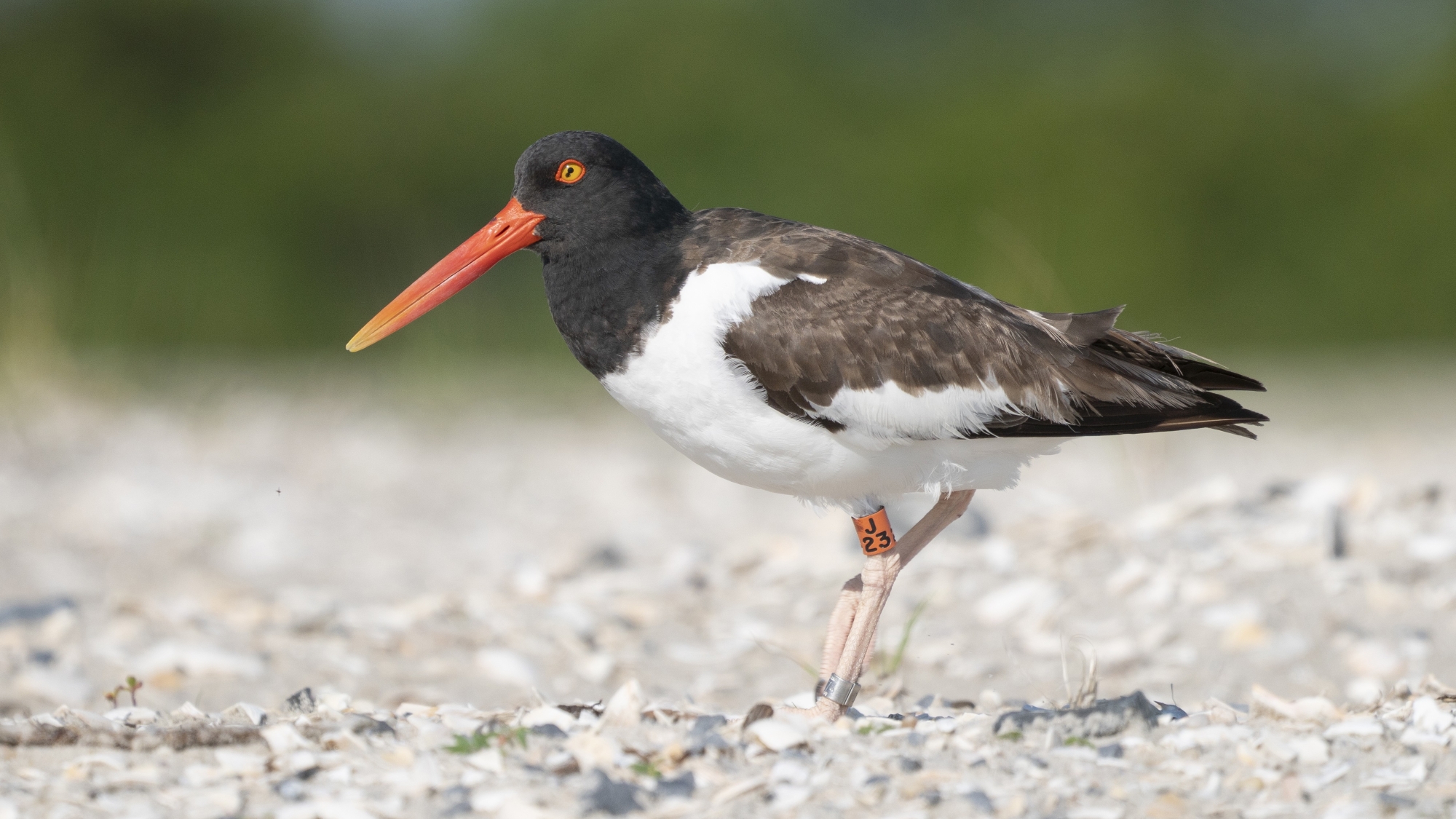
Photo by Erica Heusser
Resighting and Reporting Bands
Banding birds helps researchers learn about demographics, movement, and habitat requirements. In turn, this information can assist in identifying threats and limiting factors that managers and conservationists can work to address. Coordinated range-wide banding has been a cornerstone of the Working Group since its foundation.
To make resighting easier for observers, the Working Group established a standardized banding scheme for American Oystercatchers breeding in North America. Each oystercatcher receives duplicate field readable bands on its upper legs, improving visibility of the two- or three-character codes engraved on the bands. Since 1999, over 8,500 American Oystercatchers have been banded in the U.S.
The Working Group maintains the American Oystercatcher Band Database so site managers and researchers can efficiently enter and search records of banded oystercatchers. Members of the public can also report bands and look up oystercatchers they have seen previously. So far, there are over 122,000 resights in the database.