
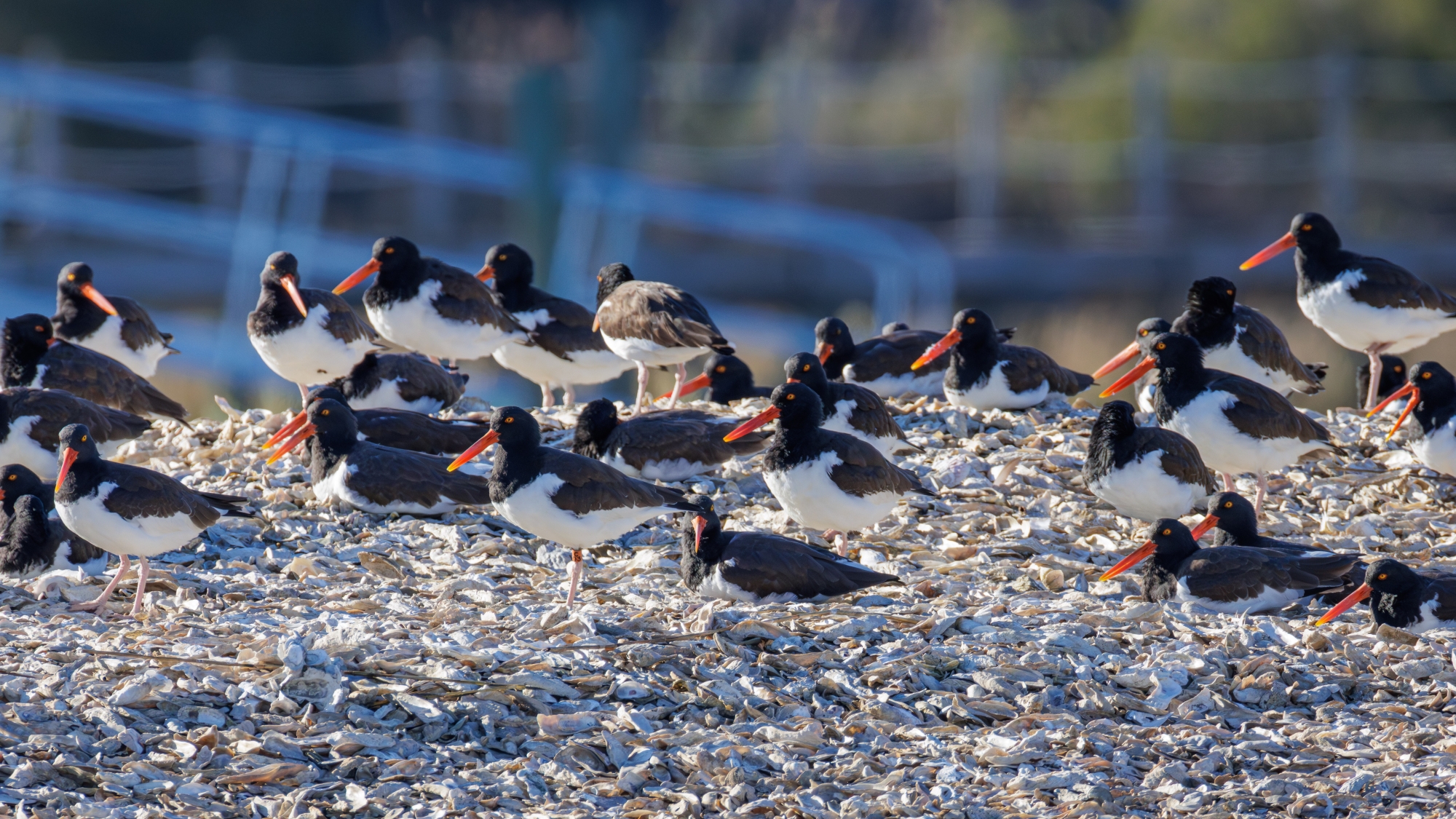
Photo by Ben Saunders
Habitat Restoration
Sea level rise and our changing climate, especially more severe and more frequent storms, are affecting our coastal habitats. While hurricanes can create new habitat by scouring vegetation away or adding sand to nesting sites, severe storms can also degrade or destroy nesting and roosting habitat altogether. In addition, marshes which provide important breeding, feeding, and roosting areas are being swallowed up in some areas due to sea level rise. Targeted management of nesting areas has protected oystercatchers from human disturbance and predators, but this is their next big challenge.
Land managers, biologists, and coastal engineers are working on ways to create or restore these habitats using various methods including adding dredged sediment to increase elevation or create new islands, placing breakwaters or other structures to protect vulnerable sites, and building living shorelines to protect marshes. The Working Group has developed a Habitat Restoration Database where projects can be entered so that others can learn best practices for managing and restoring habitats on their sites.