
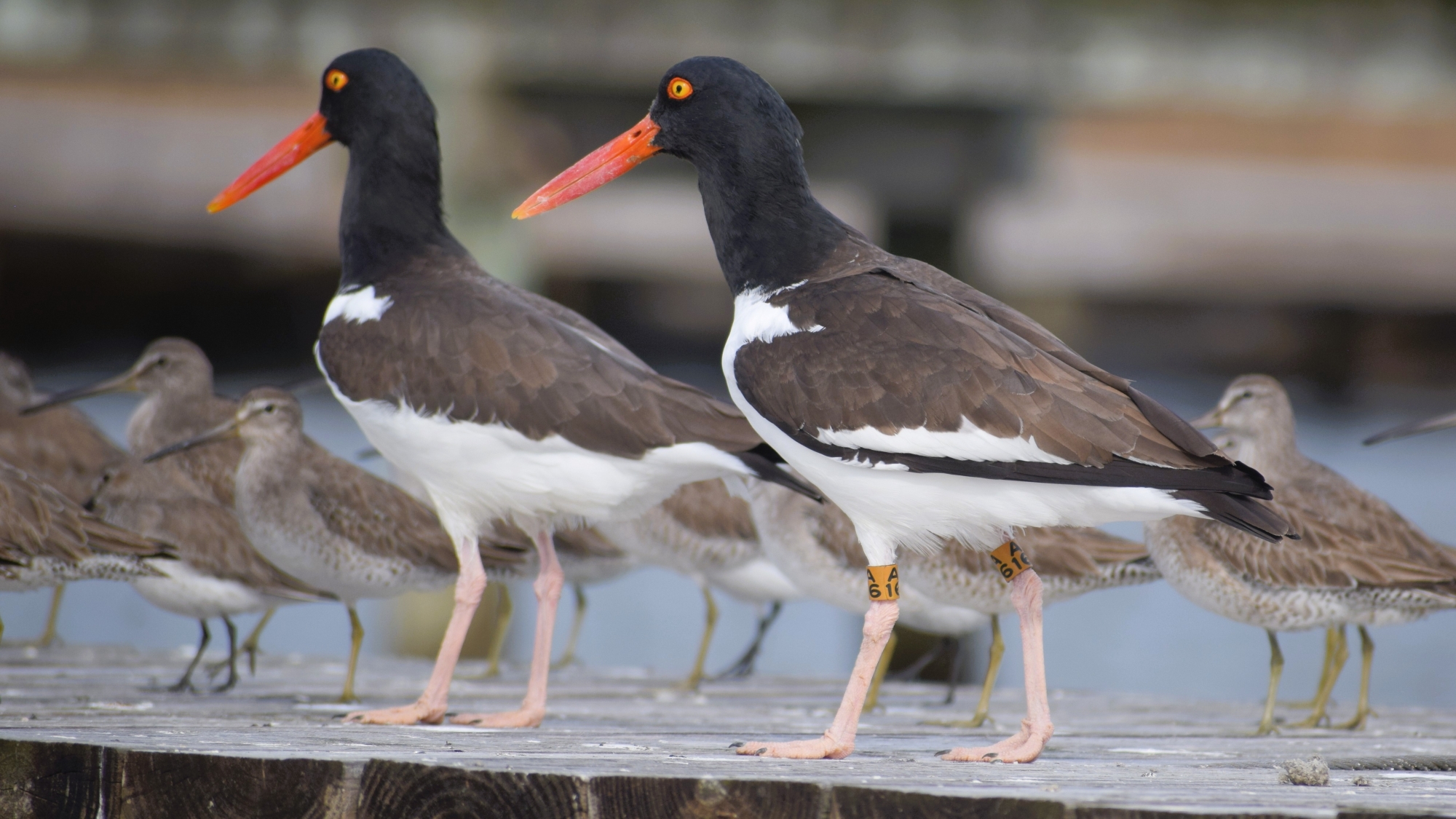
Photo by Kristen Johnson
Management
Management for American Oystercatchers as in other coastal dependent species is needed on an annual basis. Threats are never truly eliminated in this dynamic system. The most common management strategies are related to human disturbance, habitat, and predators.
Disturbance Management
American Oystercatcher’s need for coastal habitats along with the public’s affinity for beaches, islands, and waterways creates an undisputed conflict. Oystercatchers need habitats free of disturbance from human activity including pets during their year-round life cycle but oystercatchers (or rather their nests and chicks) are especially vulnerable during the breeding season. Disturbance can lead to nest abandonment, eggs becoming too hot or too cold to hatch, and chicks being abandoned and left exposed to heat, cold, predators, and starvation.
Management can include signage, law enforcement, coastal stewards, and education on how human activities can lead to breeding failure, exhaustion during migration, and disturbance during winter on roost and feeding sites when rest and refueling are critical. Symbolic fencing–posts with string between them–is a common management tool to mark off areas that are temporarily closed for the protection of oystercatchers or other coastal birds.
The Atlantic Flyway Shorebird Initiative Human Activities Working Group has developed tools, trainings on Community Based Social Marketing, and guidance documents to help managers address disturbance to shorebirds. Resources available here. Efforts such as Share the Shore and the Guide to Ethical Photography page have been developed to educate the beach-going public on why disturbance can be so damaging to oystercatchers and other coastal obligate species while also inviting the public to still enjoy beaches and other coastal habitats in a responsible way.
Habitat Management
American Oystercatchers are able to nest in a variety of habitats, from densely vegetated marsh islands to sand beaches, but they prefer to place their nests in unvegetated locations, preferable with some open space surrounding. Similarly they prefer to roost in the open, where they can see the approach of predators like falcons. Therefore, habitat management to remove excessive vegetation or to manipulate other features that they either prefer or avoid, such as adding nesting platforms to low-lying areas, can improve recruitment of birds to nesting and roosting areas.
Predator Management
Over-abundant predators are a constant threat to oystercatcher eggs, chicks, and adults. Predators can be avian: gulls, crows, diurnal raptors, owls, and even some heron species are present or near many beach and marsh habitats. Gulls and crows in particular are quick to swoop in when human activity disturbs birds from their delicious eggs or chicks. Other species such as ghost crabs and snakes can also predate eggs and chicks.
Mammals such as raccoons, foxes, coyotes, skunks, outdoor cats, and rats are often found on mainland beaches and barrier islands, and can swim to more isolated islands or marshes. Once there, they are a serious threat to oystercatchers’ nesting success. Often they are super-abundant because they are generalists that are able to capitalize on resources like food waste that people unintentionally provide. Specialist species, like oystercatchers and other coastal nesting birds, require specific habitats to nest in and therefore have a harder time than generalists adapting to pressure from predators.
Predator management can be lethal or non-lethal. Non-lethal management includes electric fencing, harassment, and capture and release when legal. Other options may manipulate the environment, like removing predator perches where avian species are a problem or securing or removing food waste that attracts predators to a nesting site. Lethal management can include egg oiling, trapping, and shooting. Lethal predator management is typically used when non-lethal management cannot be implemented or is ineffective for some reason and only occurs when the bird populations are more imperilled than the predator population that is being managed. In most cases, permits are necessary to carry out lethal management and they are required for some non-lethal techniques as well.